What Intelligence, Awareness, and Machines Really Are
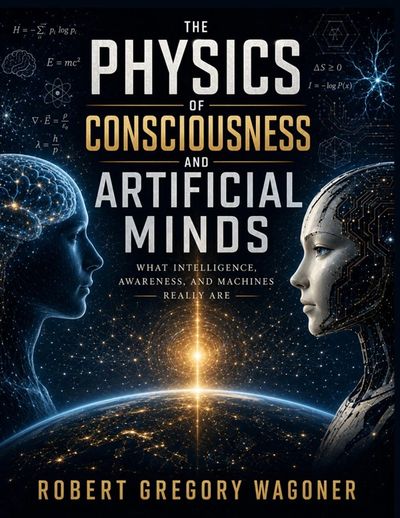
The Physics of Consciousness and Artificial Minds
The machines are already here, and the real question is what the universe must provide before any mind—biological or artificial—can truly be conscious. Millions now speak with AI systems that sound thoughtful, uncertain, even self‑aware, yet almost no one asks what physical reality itself demands for consciousness to arise.
This book, written by a chief engineer, dives deeply, straight into that problem. It reframes the debate from “could a machine feel?” to the deeper engineering requirements: thermodynamic costs, information structures, biological constraints, and the limits of what any substrate can support.
Across six parts, it explains why intelligence isn’t awareness, how entropy and emergence shape every theory of mind, what the brain is actually doing when it constructs a self, and what modern AI systems are doing under the hood. It dismantles quantum‑mind claims, examines whether machines could suffer, and confronts the unsettling possibility that certainty about consciousness in any other system may be permanently unreachable.
This is not a book of easy answers. It is a book that finally asks the right questions, with plain language, rigorous reasoning, and no hand‑waving. The question of machine consciousness is no longer hypothetical. It is an engineering problem, an ethical problem, and a civilizational one.
AVAILABLE AT MOST BOOK RETAILERS, INCLUDING AMAZON.COM

Entangled in Risk: Navigating the Ethical Frontier of AI
Entangled in Risk: Navigating the Ethical Frontier of AI guides readers through the evolving landscape of artificial intelligence, focusing on its profound ethical implications. Drawing on real-world case studies, it analyzes both the benefits and risks of AI systems and humanoid robots. Topics such as bias, privacy, and the societal impact of AI are explored in depth, with thoughtful recommendations on how to mitigate risks while maximizing potential.
It also examines how AI influences public perception, decision-making, and the future of work, highlighting dilemmas such as discrimination, manipulation of information, and industry disruption. With a balance of technical insight and practical strategies, it provides readers with tools to navigate the ethical terrain of AI responsibly, emphasizing transparency, accountability, and human well-being. Whether you’re a technologist, policymaker, or simply curious about the future, it offers a valuable resource for confronting the challenges ahead.
AI is Being used to Attack and Defend Cybersecurity

Cyber Security and AI Frontiers
AI is transforming the rules of cybersecurity, and the race is on. Cyber Security and AI Frontiers reveals how attackers are leveraging generative AI for phishing, deepfakes, and ransomware, while defenders fight back with AI-driven threat detection, behavioral forensics, and autonomous response. Learn how today’s large language models face vulnerabilities like prompt injection, adversarial attacks, and supply chain risks.
Go beyond the headlines to see how organizations are redesigning security with AI at the core: reimagining Zero Trust, enabling real-time exposure management, and applying predictive analytics to threat intelligence. Case studies from finance, healthcare, and critical infrastructure illustrate AI in action, protecting (or compromising) digital operations.
Explore tomorrow’s threats in smart cities, autonomous vehicles, IoT, edge computing, and cloud-native platforms. Discover how AI-based authentication and behavioral biometrics are redefining digital trust in a world of deepfakes.
Finally, step into strategy: nation-state cyberwarfare, ransomware ecosystems, insider threats, AI governance, regulations, workforce development, and building an ethical cybersecurity culture. With insights on quantum risks, blockchain synergies, and AI-enhanced disaster recovery, this book is your essential guide to navigating an AI-driven security future.
How Artificial Intelligence Is Quietly Shaping Your World an
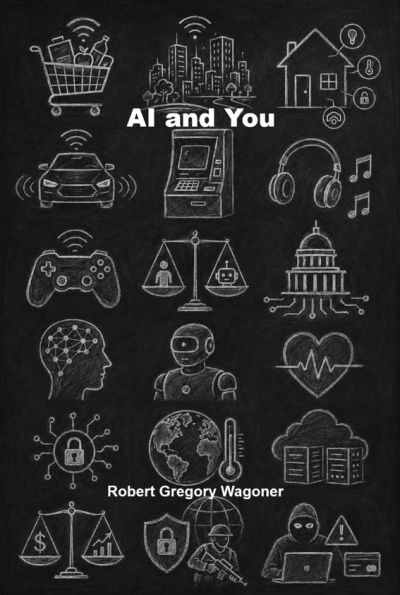
AI and You: The Future Is Now
You already live in the age of artificial intelligence. It unlocked your phone this morning, filtered your inbox, shaped what appeared in your social media feed, and quietly influenced dozens of decisions before you finished your first cup of coffee. Most people sense that something significant is happening but are not quite sure what it is, how it works, or what it means for their lives, their jobs, and the world their children will inherit. This book closes that gap.
Written for curious readers rather than computer scientists, AI and You takes you inside one of the most consequential technologies ever built, explaining not just what AI does but why it works the way it does, where it is headed, and what questions every informed citizen should be asking. From the algorithms shaping culture and commerce to the governance battles playing out in Washington, Brussels, and Beijing, from the promise of AI-accelerated medicine to the very real risks of bias, surveillance, and misinformation, this is the clear-eyed, honest guide to understanding the technology that is already rewriting the rules of everyday life.